




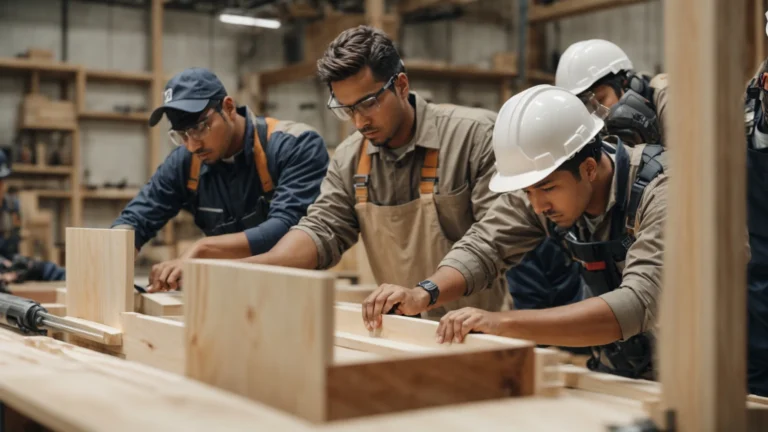
Essential Manual Labor Skills Enhancement Workshops
In an age where digital media dominates, the value of hands-on manual labor endures as a cornerstone of the economy.
Professional growth in this vital sector hinges on continuous investment in skill enhancement and adept management of both time and resources.
Recognizing this, a series of workshops has been curated, aiming to sharpen the abilities that are fundamental to success in the physical workforce.
From safety protocols to the implementation of complex machinery, these sessions are structured to amplify the competencies of manual laborers in an ever-changing job market.
In this article, we delve into the transformative potential these workshops have for individuals eager to advance in their craft.
Key Takeaways
- Core Skills in Manual Labor Enhance Both Professional Growth and Job Satisfaction
- Adaptability to Technology and Soft Skills Are Essential for Modern Manual Labor
- Hands-on Training Workshops Are Key to Proficiency With Tools and Machinery
- Soft Skills Development Is Crucial for Effective Communication and Teamwork
- Specialized Workshops Help Identify and Fill Gaps in Labor Market Skills
Understanding the Basics of Manual Labor Skills

In the realm of manual labor, success hinges on an individual’s mastery of certain core skills.
Identifying these skills stands as the initial step toward professional growth and enhanced job performance.
Workers, from seasoned engineers to those new on the job site, benefit from a clear understanding of their current abilities and how they align with the demands of their role.
This understanding, coupled with active cooperation among team members, also contributes to heightened employee engagement and job satisfaction.
By diligently assessing their own skill levels, laborers can set realistic and attainable goals for improvement.
Skill enhancement workshops serve as an invaluable resource in this process, providing structured environments where discrimination of essential competencies becomes clear, and progression towards excellence is made possible.
Identifying Core Skills for Manual Labor Success
Success in the manual labor sector often requires an adept understanding of core skills that align closely with the intricacies of the profession at hand. In light of the diverse workforce, which may include refugees integrating into a new society, there’s an increasing need for tailored human resource management that actively focuses on policy development to include comprehensive training in areas like health care support. Progressive organizations recognize the value in equipping their labor force with the training necessary to respond to a variety of critical, on-the-job scenarios—ensuring a strong, adaptable, and skilled workforce.
- Examine the demands and specific skill sets pertinent to individual manual labor professions.
- Implement socially conscious human resource policies that aid in the professional elevation of underrepresented workers, such as refugees.
- Offer targeted health care skill development sessions to bolster the well-being and productivity of the labor force.
Assessing Your Current Skill Levels
With the pervasive shift towards automation reshaping the manual labor landscape, it becomes imperative for workers to assess their proficiency not only in traditional competencies but also in their adaptability to technology-enhanced environments. Accurate self-assessment is further complicated by the need to integrate emotional intelligence for navigating complex team dynamics, a deepened understanding of privacy principles due to increased data collection on job sites, and an appreciation for sustainability practices as companies push towards greener operations. Thus, a thorough evaluation of one’s skill level must now consider these multifaceted aspects, aligning personal development with emerging industry statistics that herald the evolving requirements of the manual labor sector.
Setting Achievable Skill Enhancement Goals
In establishing achievable skill enhancement goals, manual labor professionals bridge the gap between current competencies and desired job performance outcomes. Pursuits in leadership development and financial acumen afford workers a wider range of opportunities within their industries. By integrating software proficiency, maintaining physical readiness with exercise, and staying attuned to market shifts, laborers craft a well-rounded approach to their personal and professional growth.
| Skill Category | Current Proficiency | Desired Outcome | Resources for Improvement |
|---|---|---|---|
| Leadership Development | Basic | Advanced | Workshops, Mentorship Programs |
| Finance | Intermediate | Expert | Online Courses, Seminars |
| Software | Novice | Proficient | Tech-Specific Training, E-learning Modules |
| Exercise | Adequate | Optimal | Fitness Programs, Health and Wellness Coaching |
| Market Awareness | General | Strategic | Industry Publications, Trend Analysis Reports |
Mastering Essential Safety Techniques in the Workplace
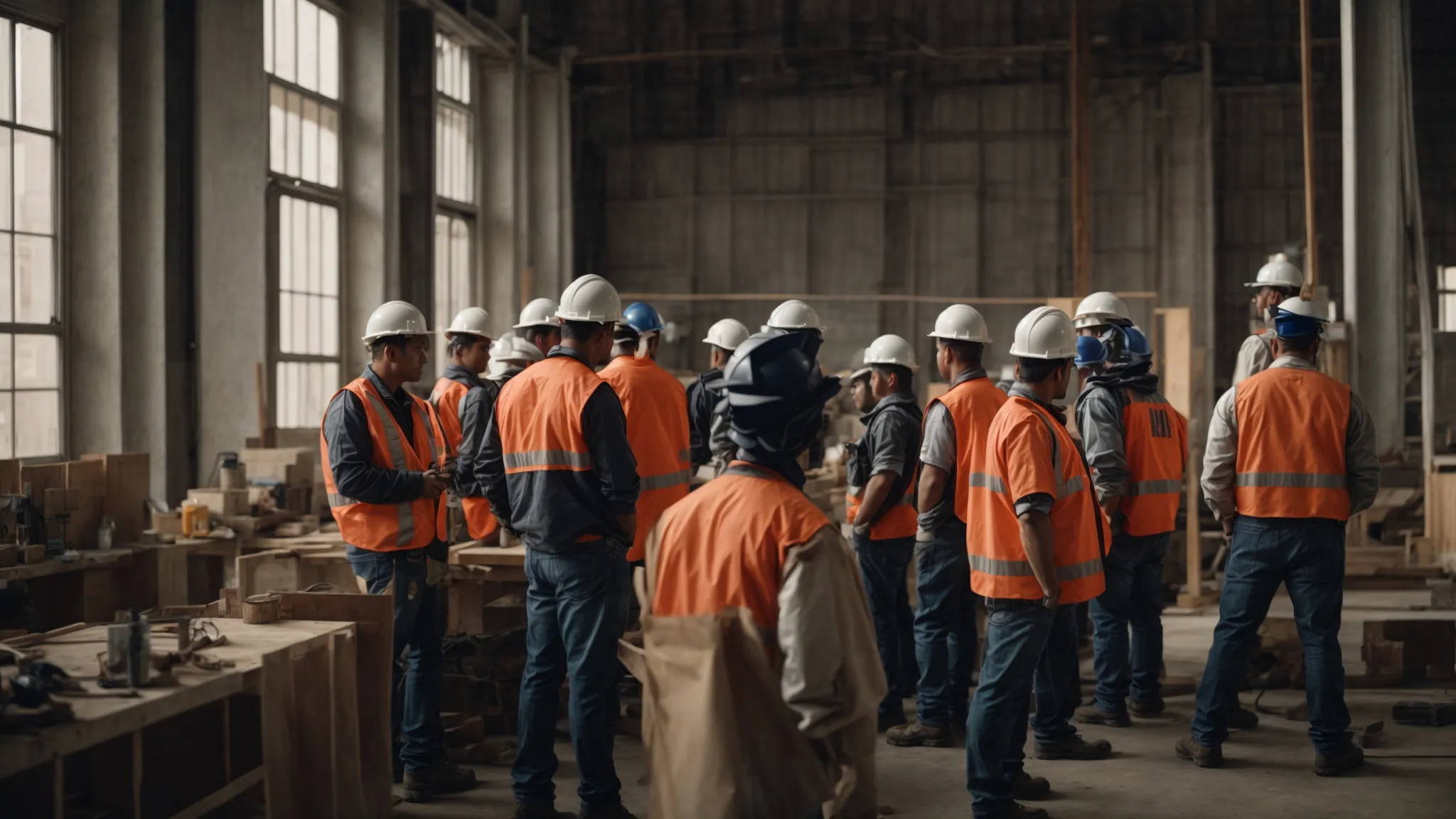
In the construction of a comprehensive safety strategy, employee training plays a pivotal role in mitigating workplace hazards.
Skill development workshops focused on safety not only prepare workers to identify potential risks, but also instruct on the correct application of Personal Protective Equipment (PPE), which is often a crucial factor in preventing injuries.
Equally significant is the knowledge of initiating safety protocols and managing emergency responses, an aspect of training that can have a direct impact on an employee’s well-being.
By introducing these elements into the training curriculum, organizations contribute to an overall enhancement of their workforce capabilities, which, in turn, can positively affect employee benefits and salary outcomes.
Learning About Common Workplace Hazards
As the workforce navigates common workplace hazards, it becomes increasingly relevant how microlearning techniques can bolster safety outcomes. Within sectors like agriculture, where the risk for injury remains high, swift and accessible methods of training harness the collective experience of the labor force to promote a culture of vigilance. This targeted dissemination of knowledge is key, not only for supporting individual safety but also for nurturing economic growth within the informal economy.
- Utilizing microlearning to provide rapid and effective safety training for agricultural workers.
- Capitalizing on the role of experience in recognizing and responding to hazards.
- Emphasizing safety as a fundamental component driving economic growth, especially in the informal economy.
Training on Personal Protective Equipment (PPE) Usage
As international labour law intersects increasingly with global trade and outsourcing, the necessity for comprehensive PPE training becomes more pronounced, transcending beyond mere compliance to become a core tenet of community and workforce culture. Such workshops not only introduce workers to the intricacies of correct PPE usage but also instill a sense of collective responsibility that enhances safety protocols in diverse working environments.
Implementing Safety Protocols and Emergency Response
In the sphere of manual labor, robust training programs on safety protocols and emergency response are imperative to minimize the risk of injury and ensure swift machine-related incident management. Such training merges technology with practical intelligence, empowering workers with the skills to anticipate hazards and react decisively in crisis situations.
Elevating Efficiency With Time Management Workshops

In the bustling environment of the workplace, understanding how to harness time effectively is akin to wielding a versatile tool, one that can significantly benefit both the customer experience and internal efficiency.
Workshops centred on time management address the art of prioritizing tasks, ensuring that the rhythm of the workday aligns with strategic goals.
Hands-on techniques for minimizing distractions champion the ability to maintain focus, while interactive sessions leveraging virtual reality illustrate practical strategies for balancing the swiftness of task completion with the upkeep of quality standards.
These essential facets collectively forge a blueprint for workers to thrive amidst the constant flux of daily demands.
Prioritizing Tasks for Effective Workday Planning
In the pursuit of operational excellence, the mainstreaming of time management into the daily workflow necessitates a strategic approach towards prioritizing tasks: it harnesses creativity, ensures meticulous accounting of hours, optimizes income generation, integrates computer technology, and underpins insurance policies for bolstered productivity. Such a strategy allows workers to classify their responsibilities effectively, assigning urgency to pivotal tasks while permitting flexibility for unforeseen challenges. As a result, employees maximize their contribution to the organization’s success, fortifying its competitive edge in the market.
Reduced risk
| Priority Level | Task Category | Tools and Resources | Impact on Workflow |
|---|---|---|---|
| High | Project Deadlines | Computer Software | Direct income generation |
| Medium | Creative Briefs | Collaborative Platforms | Enhanced innovation |
| Low | Administrative Updates | Accounting Systems | Workflow efficiency |
| Variable | Insurance Documentation | Digital Archives |
Techniques for Minimizing Distractions and Interruptions
In the bustling arena of manufacturing, where every minute counts, experts recognize the powerful impact that effective training and development programs can have on minimizing distractions and interruptions. By fostering a culture where focused employment is valued and enshrined through rigorous training, employees can sharpen their focus, resulting in a more streamlined and productive workflow.
Strategies for Balancing Speed and Quality of Work
In today’s dynamic construction sector, where nursing staff increasingly play integral roles in operational safety, time management workshops are expanding to include certification procedures that ensure a rapid yet meticulous approach to care. These tailored workshops provide a competitive advantage by honing problem-solving skills, thus enabling workers to deliver high-quality, branded service without sacrificing the speed essential to project success.
Advancing Skills With Power Tools and Machinery

In the tapestry of manual labor, proficiency with power tools and machinery is akin to an artist’s familiarity with their brushes and palettes – it’s the gateway to excellence within the trades.
As such, workshops designed to enhance these skills are vital to a laborer’s repertoire, offering an immersive education that ranges from introductory sessions on commonly used equipment to in-depth discussions about their maintenance, safety, and proper operation.
These programs not only cultivate technical finesse—reflected in the diploma accredited upon completion—but also deepen participants’ understanding of the psychology behind safety and efficiency in the workplace.
Furthermore, through hands-on practice sessions, workers can apply their skills in real-time, reducing the evaluation time on job sites and potentially lessening unemployment in the skilled labor pool.
Robust research underpinning these training modules ensures that participants are well-equipped to handle the demands of an evolving industry, nurturing their career trajectory and fostering a safer, more productive working environment.
Introduction to Commonly Used Tools and Machinery
An introduction to commonly used tools and machinery lays the foundation for workforce development in the manual labor sector: It equips individuals with the knowledge crucial for compliance with occupational safety and health standards. Such training also acknowledges the diversity within the workforce by incorporating practices that address gender inclusivity, ensuring equitable access to skill development and promoting holistic well-being among all employees.
| Tool/Machinery | Knowledge Imparted | Health and Safety Focus | Inclusion in Workforce Development |
|---|---|---|---|
| Electric Drill | Operation and Drill Bit Selection | Proper Handling and Risk Assessment | Training Modules for Varied Skill Levels |
| Circular Saw | Cutting Techniques and Material Suitability | Guard Usage and Personal Protective Equipment | Courses Tailored for Gender-Specific Ergonomics |
| Forklift | Driving Controls and Maneuvering | Maintenance Checks and Load Balancing | Certification Programs Accessible to All Genders |
| Welding Equipment | Weld Types and Power Settings | Ventilation and UV Protection | Inclusive for Gender Diversity in Skilled Trades |
| Hydraulic Press | Pressure Adjustment and Material Specifications | Emergency Stop Procedures and Equipment Inspection | Skills Enhancement Regardless of Gender |
Maintenance, Safety, and Operation Training
At the core of enhancing manual labor expertise, the development of maintenance, safety, and operation training instills in workers the capacity to proficiently navigate power tools and machinery. Instructional design plays a pivotal role in crafting these educational experiences, ensuring that comprehensiveness and law adherence coalesce in training programs. Such programs often integrate internships, allowing participants to apply theoretical knowledge in practical environments, augmenting their learning and ensuring that onboarding processes are steeped in understanding and experience.
- The development of training modules incorporates instructional design to merge hands-on learning with legal compliance.
- Internships give meaningful context to operation principles, enhancing the onboarding experience for new workers.
- Maintenance and operational expertise is elevated through a concept of continuous, practical skill application.
Hands-on Practice Sessions for Skill Application
Within the framework of manual labor workshops, hands-on practice sessions emerge as a cornerstone of skill application, playing an instrumental role in enhancing productivity. These sessions distill complex information into tangible experience, allowing workers to internalize the nuances of power tool and machinery use. Such immersive training is particularly beneficial for individuals impacted by immigration, equipping them with skills that are valuable in the business and construction sectors.
The design and execution of these practical sessions reflect the industry’s commitment to the professional development of its workforce:
Enhanced collective efficiency and project completion rates.
| Session Component | Objective | Impact on Worker | Relevance to Business Outcomes |
|---|---|---|---|
| Real-life Scenarios | Apply skills in controlled, yet realistic settings. | Confidence in skill application, readiness for diverse job sites. | Reduced training-to-work transition time, optimized for rapid deployment. |
| Peer Collaboration | Foster a collaborative learning environment. | Improved communication and teamwork abilities. | |
| Feedback and Reflection | Understand and refine techniques post-practice. | Personal growth and skill mastery. | Continuous improvement cycle contributing to overall company performance. |
Developing Critical Soft Skills for Manual Laborers
In the thick of manual labor environments, the cultivation of soft skills stands as a crucial factor for individual empowerment and team success.
Workshops aimed at bolstering soft skills lend credence to the principle that continuous education is a powerful resource for laborers navigating the complex interpersonal dynamics of their workplaces.
Advocacy for effective communication within team settings enables workers to evolve into proactive stakeholders within their organizations.
Furthermore, an emphasis on augmenting problem-solving and decision-making proficiencies promotes a sense of agency in the face of operational challenges.
Equally important is the development of strategies to manage work-related stress while fostering resilience, ensuring laborers can withstand the physical and mental demands of their roles with enhanced fortitude.
Communicating Effectively in a Team Setting
In the context of manual labor, where wages often hinge on the successful completion of collaborative efforts, the ability to communicate effectively within a team is indispensable. Mastering this soft skill bridges the gulf not only between various levels of higher education and on-the-job experiences but also between successful project management and learning outcomes. By engaging in professional development geared towards effective team communication, laborers are positioned to transcend poverty by expanding their professional repertoire and enhancing their potential for higher earnings.
- Effective team communication fosters an environment where diverse educational backgrounds converge towards a common goal.
- Enhancing communication skills contributes to superior project management outcomes.
- Continuous learning and development in communication empower laborers to seek higher wages and break cycles of poverty.
Developing Problem-Solving and Decision-Making Skills
Amidst the bustling activity on construction sites, the strengthening of soft skills like problem-solving and decision-making becomes an operational imperative for workforce innovation and opportunity act initiatives. With an adept capability to dissect complex scenarios, workers can navigate the implications of vacation schedules, tax considerations, and employee retention strategies—key elements to thriving in manual labor professions. Here, fostering such skills is not just about personal advancement; it’s about shaping a workforce that can adeptly manoeuvre through a labyrinth of financial and regulatory frameworks.
Handling Work Stress and Building Resilience
In an era where artificial intelligence reshapes labor dynamics, workshops aimed at managing work stress endow manual laborers with strategies to fortify their resilience against mounting pressures. Navigating stress in a healthy manner is bolstered by the insights from data analysis, providing a factual basis to inform and refine coping strategies. Cultivating resilience not only enhances the individual’s well-being but serves as a valuable credential akin to a college degree in today’s labor market, garnering recognition from trade unions and employers alike.
Implementing Advanced Workshops for Specialized Skills

As the global workforce continues to specialize, the need for targeted skill development becomes increasingly critical.
Advanced workshops are pivotal in this regard, focusing on identifying needs for specialized skill development within the labor market.
Such workshops are meticulously designed, drawing upon resources like PDF materials and a multitude of internet tools, to provide a tailored experience that aligns with industry-specific requirements.
Human resources departments and leadership within organizations play a key role in coordinating these training efforts, often in collaboration with vocational rehabilitation specialists.
Post-workshop, it is essential to track progress and assess the enhancement of skills to ensure that the investment in training translates into measurable improvements in workforce competency.
Identifying Needs for Specialized Skill Development
The process of pinpointing gaps in manual labor skills often begins with a dialogue between team members and leadership, fostering a mentorship-driven climate that honors the nuances of language and culture within the workforce. Engaging in collective bargaining, management and labor representatives collaboratively establish the framework for specialized workshops, ensuring the development of skills meets both immediate operational needs and long-term career growth for employees.
Customizing Workshops for Industry-Specific Requirements
The efficacy of specialized workshops relies heavily on the adept skills of the facilitator, whose strategy must be tailored to match industry-specific demands. By leveraging insights from social science research, workshop facilitators can tailor content to address the unique challenges and skills relevant to a particular sector, thus maximizing the value and applicability of the training provided. As attendees navigate through complex curricula, they benefit from structured FAQ sessions that clarify intricate topics, often followed by podcast recommendations for continued learning.
- Facilitators align workshop strategy with industry-specific skill requirements.
- Social science insights inform the custom-tailored curriculum to ensure relevance and practical application.
- Structured FAQ sessions are integral in addressing participant queries and enhancing understanding.
- Podcast suggestions supplement post-workcamp; by continuing education for participants eager to delve deeper into subject matter.
Tracking Progress and Assessing Skill Improvement After Training
Following the conclusion of skill enhancement workshops, the mediation between what was taught and its practical application becomes pivotal to a successful training program. Continuous feedback mechanisms, inclusive of those with disabilities, provide insights into the workforce’s knowledge retention, while quizzes offer quantitative data on the effectiveness of the workshops. This level of assessment is instrumental in ensuring employees can fully integrate new skills into their daily tasks, thus strengthening their contributions to the labor market’s growth and adaptability.
Conclusion
Manual labor skills enhancement workshops significantly boost job performance, providing workers with essential training that aligns with industry demands.
By focusing on everything from core competencies to soft skills, these workshops empower employees to advance their careers and contribute meaningfully to their teams.
As labor environments evolve, hands-on practice and advanced instruction ensure laborers remain proficient and adaptable.
Ultimately, these training sessions are vital for cultivating a skilled, resilient workforce ready to meet the challenges of the labor market.