




Transforming Your Home Office Into a Haven for Productivity
As the demands on professionals like Tom Tugendhat, Secretary of State, intensify, the necessity for a well-designed home office becomes clear—a sanctuary where strategy, rather than the clamor of daily life, dictates the rhythm.
Careful consideration of layout can drive efficiency, much as precise organization within a Border Force unit ensures smooth operation.
Incorporate smart storage solutions like rolling carts and built-in cabinetry to keep vital resources at your fingertips while maintaining an uncluttered mind.
Selecting the ideal desk becomes not just a question of aesthetics, but a command center tailored for task mastery.
Keep reading to find out how to transform your space into a hub where productivity thrives.
Key Takeaways
- A Strategically Organized Home Office Based on Individual Work Style and Ergonomics Can Greatly Improve Productivity
- Zonal Planning Within a Home Office Can Create Designated Areas for Specific Tasks, Fostering an Environment Where Creativity and Efficiency Thrive
- Incorporating Proper Lighting and Innovative Storage Solutions Can Transform a Space, Promoting Focus and a Clutter-Free Work Environment
- Ergonomic Desks and Chairs, With Considerations for Material and Design, Are Essential for Long-Term Health and Heightened Work Performance
- The Color Scheme, Minimalist Design, and Personal Touches Are Critical Factors in Crafting a Workspace That Enhances Mood and Concentration
What’s the Best Layout for My Home Office Design?
With the shifting landscape of remote work becoming a definitive component of professional life, many individuals find themselves grappling with the nuances of creating a home office that not only complies with the law of productivity but also reflects their unique work style.
Selecting the optimal layout goes beyond mere aesthetics; it acts as the fulcrum for sustainable work habits.
To anchor oneself in the tide of emails and deadlines, a strategically organized space based on zonal planning paves the way for heightened concentration and workflow efficiency.
Comprehending one’s work style is pivotal in tailoring a home office that amplifies output and maintains well-being.
By incorporating principles of ergonomics into the placement of desks and chairs, professionals can circumvent the pitfalls of discomfort and strain.
Additionally, lighting plays a significant role in creating an ambiance conducive to focus; something as simple as positioning a desk to benefit from natural light or the addition of a thoughtfully placed chandelier can transform the room.
When such elements converge, the result credits a workspace that functions as an enclave of inspiration and diligence.
Identifying Your Work Style to Choose a Layout
Understanding personal work style demands an introspection into daily tasks and preferences which inevitably informs the choice of furniture and office layout to promote productivity: Does the dynamism of a standing desk appeal to one’s sensibilities, or does a traditional desk suffice? Are multiple monitors a necessity, prompting the need for a more extensive desk surface? Assessing whether the inclusion of tableware for client meetings or space for contractors to collaborate will affect tax deductions further refines the selection of office elements.
| Work Preference | Furniture/Feature | Productivity Impact | Tax Consideration |
|---|---|---|---|
| Standing Desk Enthusiast | Adjustable Standing Desk | Reduces fatigue, increases energy | Potential deduction as necessary equipment |
| Multitasking Professional | Extensive Desk Surface | Accommodates multiple devices for seamless workflow | Deductible if solely for business use |
| Hosts Client Meetings | Conference Area with Tableware | Facilitates professional engagements | Partially deductible if used for business meetings |
| Collaborative Projects | Modular Furniture for Teamwork | Encourages collaboration and idea exchange | Deductible depending on the nature of use |
Importance of Zonal Planning for Enhanced Focus
In the quest to carve out a realm of productivity within one’s domicile, zonal planning asserts its presence as a strategic necessity. By allocating specific regions within the home office for varied tasks such as contemplative research or vibrant brainstorming sessions, individuals can foster an environment where creativity thrives unimpeded. This shrewd allocation not only harnesses the psychological benefits of associative spatial planning but also mirrors the coordination seen in thriving metropolises like New York City, where areas are designated for specific purposes, contributing to the city’s overall efficacy and revenue generation.
Moreover, integrating zonal planning into home office design can echo the safety of Rwanda’s considered approach to urban organization, ensuring every space within the office serves a purpose from task completion to moments of reprieve. Strategically placed sconces can delineate focus areas, casting light on critical workstations while dimmer zones accommodate restful reflection, thus architecting a layout that pivots seamlessly between industry and tranquility:
| Zone | Function | Design Element | Impact on Productivity |
|---|---|---|---|
| Research Nook | Quiet contemplation and strategic planning | Soft lighting, Comfortable seating | Boosts focus, encourages deep thinking |
| Creative Corner | Idea generation and creative exploration | Whiteboards, vibrant wall art | Stimulates creativity, fosters innovative thinking |
| Administrative Pod | Task management and correspondence | Ergonomic chair, organized desk | Enhances efficiency, reduces fatigue |
| Meeting Zone | Client meetings and collaborative projects | Conference table, multimedia setup | Facilitates communication, fortifies professional connections |
Ergonomic Insights for Situating Your Desk
In devising a home office layout, taking into account ergonomic principles is not merely a trend but a policy for long-term health and productivity. As a permanent secretary might orchestrate proceedings with precision in Denver, so should individuals meticulously position their desks and chairs to maintain posture and reduce the risk of strain. Integrating metal elements with ergonomic design offers a sleek look while ensuring the furniture is sturdy and adjustable, aligning with the overarching goal of creating a purposeful and productive home office environment.
Lighting Tips for a Productive Atmosphere
Strategic lighting can make a profound difference in a home office, much like the transformative effect it has on the HM Passport Office, where clarity and precision are paramount. By introducing layers of light, a patio space adjoining the office can serve as an informal nook for creative respite while a well-placed lamp on the table ensures tasks are illuminated without undue strain on the eyes–each light source is a beacon guiding professionals through their daily journey toward achievement.
How Do I Add Storage to My Home Office?
In the quest to refine a home office that champions efficiency and style, the role of innovative storage assumes center stage.
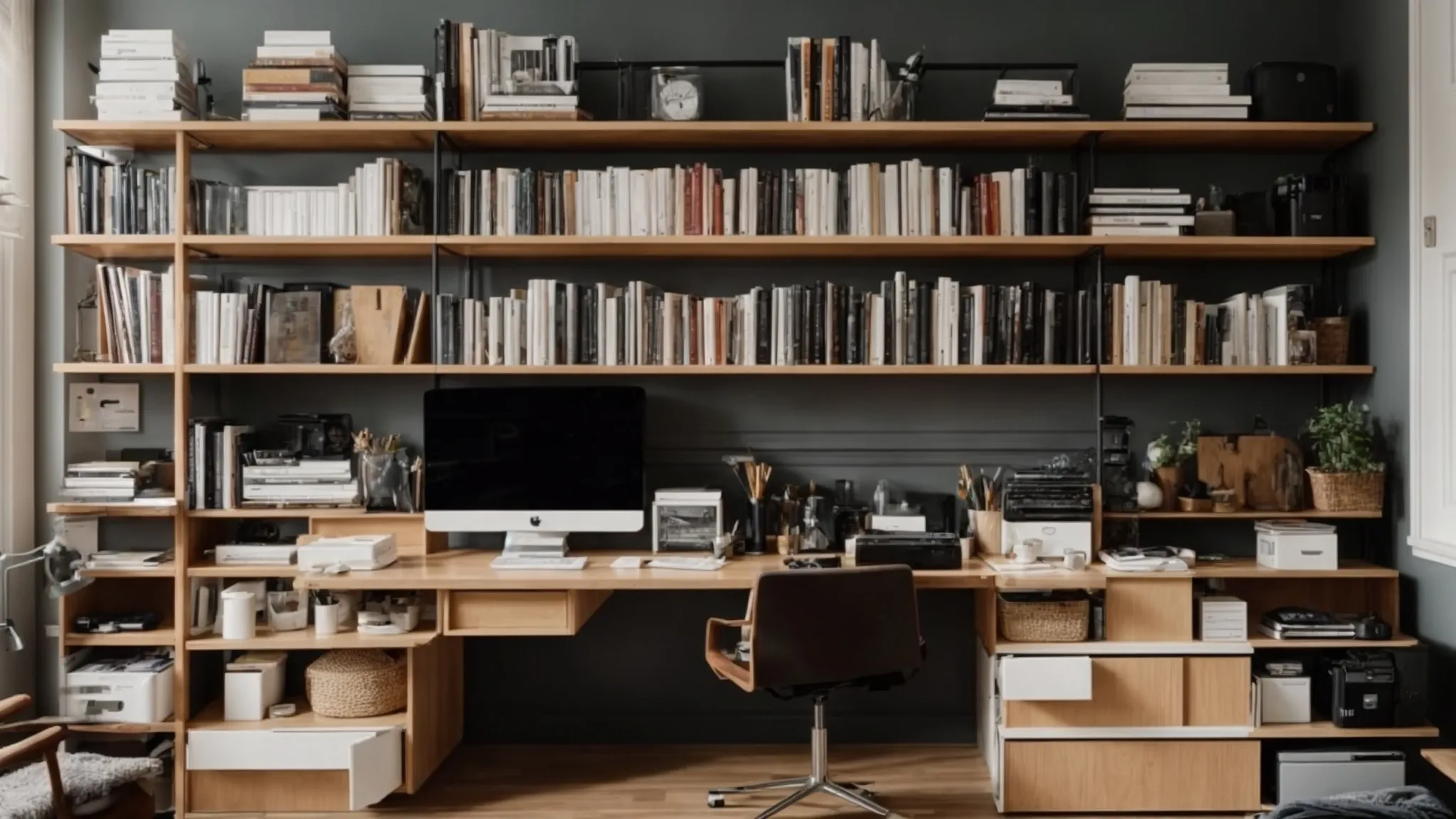
Often limited by the physical dimensions of a room, leveraging vertical space transforms the often-overlooked expanses into practical storage solutions.
Interior design experts in England and Wales advocate for the judicious use of shelves and wall-mounted units to conserve valuable floor space, thereby ensuring the area around your office chair remains uncluttered and poised for productivity.
Decluttering strategies not only streamline your workspace but also can result in noteworthy financial savings as they minimize the need for additional furniture and reduce the overall price of the office setup.
Michael Tomlinson, a leading organizational strategist, underscores the importance of innovative storage solutions, like multipurpose furniture, which ingeniously blends functionality with space economy.
Furthermore, organizing the nest of wires and tech gadgets enhances the aesthetic appeal, creating a cleaner, more focused work environment.
These storage methodologies are not just about tidiness; they’re about crafting an office space that encapsulates order and serenity, enabling professionals to work at their peak abilities.
Using Vertical Space for Storage Solutions
Seizing the heights of a room delivers a strategy that melds the rustic charm of a farmhouse aesthetic with modern practicality, ensuring that every inch contributes to a robust work environment. Capitalizing on vertical space invites the addition of floating shelves over the desk or beside the countertop, allowing for efficient storage that clears the workspace, paving the way for sharp focus on employment-related tasks. This clever use of airspace can negate distractions, assisting professionals to keep a steady eye on productivity even as mortgage calculations or technology updates beckon for their attention.
- Incorporating floating shelves to elevate organization and free up valuable desk space
- Aligning storage solutions with a farmhouse aesthetic for a cohesive and functional design
- Maximizing countertop and wall areas to minimize clutter and promote a clear, productive mindset
- Designing a storage plan that supports technology integration without overwhelming the workspace
- Implementing creative storage strategies to manage employment documents, alleviating stresses akin to mortgage management
Decluttering Tips for Maximum Efficiency
Efficient decluttering within a home office is akin to tightening border controls against illegal immigration; it requires vigilance and systematic methods to keep unnecessary items from infiltrating valuable work space. By meticulously analyzing office items like a corporation scrutinizes its budget, professionals can assess what is essential and discard what is not, just as a country examines immigration statistics to inform its policies. This approach ensures the office remains a passport to productivity, rather than a sanctuary for clutter.
Innovative Storage Solutions That Save Space
In the confluence of minimalism and functionality, innovative storage solutions stand as pivotal elements in home office design. These smart options offer sanctuaries for clothing, documents, and tech, reinforcing a sense of security while keeping essentials within arm’s reach. Cleverly designed hideaway cabinets or desks with integrated drawers serve not only as guardians of convenience but also contribute to the serene, uncluttered ambiance advocated by minimalism, paralleling the precision and organization found in UK visas and immigration offices.
| Storage Solution | Description | Benefit | Design Aesthetic |
|---|---|---|---|
| Hideaway Cabinets | Built-in or furniture that doubles as storage, concealing belongings when not in use | Maximizes space, ensures easy access to items like clothing and office supplies | Aligns with minimalist design, maintains a clean and orderly space |
| Desks with Integrated Drawers | Workstations featuring drawers and nooks as part of the design | Keeps important documents secure and at hand without cluttering the desktop | Streamlined look that complements modern home office layouts |
| Wall-mounted Organizers | Vertical storage options affixed to walls, often modular for customization | Utilizes vertical space effectively, freeing up work surfaces | Functional yet stylish, can be tailored to match home office decor |
Organizing Wires and Tech for a Cleaner Look
Matthew Rycroft, a seasoned home office setup consultant, emphasizes the impact of cord management for a pristine and professional environment. By incorporating a standing desk equipped with cable organizers, the visual chaos of tangled wires is eliminated, synergizing with the clean lines of a modern office.
| Storage Solution | Type | Description | Visual Impact |
|---|---|---|---|
| Cable Organizers | Under-desk/Hiding | Devices for bundling and routing cables neatly | Reduces clutter, enhances office aesthetics |
| Wireless Technology | Equipment | Gadgets that function without physical cables | Creates a sleek, tech-savvy workspace |
| Built-in Storage | Furniture feature | Standing desks and filing cabinets with integrated wire management | Integrates functionality, presents an organized environment |
| Concealment Tactics | Design | Strategically placed closets and decor to hide routers and power strips | Maintains a distraction-free wall space, promoting focus |
Moreover, filing cabinets and closets with designated channels foster effortless organization. Strategically aligning these storage units along the office wall not only maximizes the utilizable space but also encases tech peripherals, presenting a unified, clutter-free workspace that promotes undisturbed productivity.
How Do I Choose the Right Desk for My Home Office Design?
The fulcrum of every home office is undoubtedly the desk—a centerpiece where tasks are tackled and accomplishments achieved.
Selecting the correct desk is not a frivolous decision; it demands scrutiny akin to Chris Philp analyzing critical data before presenting to The Guardian.
Aspiring to merge practicality and style within the confines of London’s eclectic work-from-home spaces, one must first assess desk size against the allotted area, eschewing the misstep of an oversized behemoth in a modest room or a diminutive table in a palatial area.
Equally, the desk’s design should bow to ergonomics, ensuring that long hours of research or intense concentration do not culminate in aches and strain.
Discerning professionals seek out desks replete with productivity-boosting attributes—be it through clever storage solutions or technology accommodations.
Furthermore, the rise of stand-up desks invites contemplation over traditional seating arrangements, promising to invigorate those weary from the sedentary shackles of floor-bound furniture.
Assessing Desk Size for Your Available Space
In the pursuit of a home office layout that champions productivity without breaching the privacy policy of domestic life, the size of the desk plays a paramount role. Too large a composition may overwhelm a living room doubling as an office space; too small, and it might diminish a room’s potential for multifunctional use, leaving no space for essentials such as a bed or community meeting area. The careful consideration of dimensions vis-à-vis the available space facilitates a harmonious balance between work and income-generating activities within the home environment:
- Evaluating desk dimensions to ensure they complement the scale of the living room without compromising its multifunctionality
- Selecting a desk that respects the existing layout, allowing the dual-purpose space to serve both rest and community engagements
- Considering the privacy policy of work-from-home scenarios in relation to family dynamics and the presence of shared space
The Role of Ergonomics in Desk Selection
Incorporating ergonomics into desk selection requires more than just eyeing the conventional; the advent of bamboo as a material for desks at locations like 2 Marsham Street showcases a trend towards sustainable comfort. Prioritizing such ergonomic design minimizes expense linked to health repercussions from poor posture, while the natural warmth of wood, paired with an adjustable LED lamp, marries form with function to alleviate eye strain and enhance focus.
Features to Look for in a Productive Desk
When scouting for a productive desk, professionals should seek out models that not only offer robust structure often found in quality textiles but also facilitate a free flow of ideas akin to a well-implemented freedom of information act. A desk that provides ample legroom serves as a symbolic refugee for those seeking escape from cramped conditions, potentially stifling creativity. Furthermore, selections from a palette that reflects the gravitas of a minister of state can profoundly influence mood and cognitive function, with specific colors known to stimulate the mind and promote concentration.
Stand-Up Desks: Are They Right for You?
Stand-up desks, lauded for their sturdy construction and innovative designs that often feature a keyboard tray, are gaining credit in the sphere of health-conscious professionals seeking to inject their workflow with more dynamism. Rethinking the traditional sedentary setup, these desks encourage movement and can be a significant game-changer for those looking to integrate more physical activity into their workday.
How Do I Decorate My Home Office for Maximum Productivity?
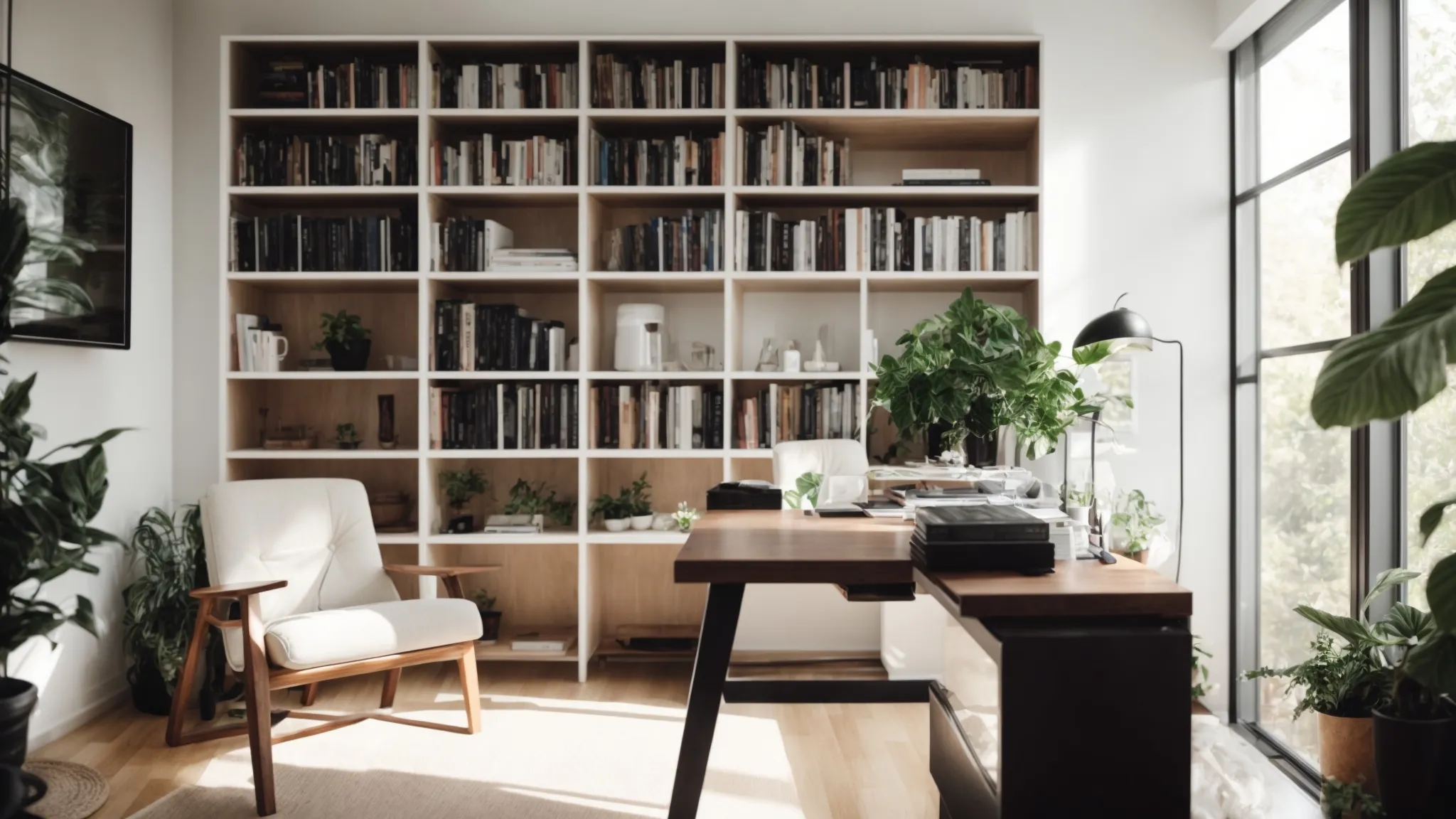
In a world inundated with data and the persistent glow of laptop screens, the design of a home office can drastically influence productivity and work experience.
Setting the stage for success starts with selecting a color scheme informed by color psychology to stimulate focus and creativity, while a minimalist approach to decoration can minimize distractions, ensuring a bookcase or a glass workspace serves function over form.
Introducing plants can transform a sterile office into a lush haven that not only purifies the air but also revitalizes the mind.
Personal touches to the workspace should enhance rather than hinder productivity, carefully curating items that motivate without contributing to clutter.
Finally, lighting is not just a necessity; it is the subtle conductor of mood and efficiency in your professional sanctuary.
Color Psychology: Choosing the Right Scheme
Choosing the right color scheme for a home office involves psychological considerations that can have profound effects on productivity and mood. The United Kingdom’s bustling business environment accentuates the need for hues that enhance concentration and foster a creative atmosphere; think of a drawer filled with vibrant color palettes instead of mundane credit card statements. Similar to the meticulous decisions of a home secretary, selecting office colors requires deliberate thought to ensure they serve as a catalyst for efficiency.
- Understand the impact of various colors on mood and productivity.
- Evaluate the prevalent colors in the existing office space.
- Select a primary color theme that promotes focus and a secondary color for accents that energize the space.
- Apply color psychology to areas like drawers and wall spaces for subtle yet continuous influence on workflow.
- Consider the psychological effects of these colors in the context of home office tasks and business objectives.
Minimalist Decoration for Less Distraction
Adopting a minimalist approach in office design equates to sowing seeds of efficiency akin to a well-maintained lawn, promising a serene landscape for productivity to flourish. By eschewing excessive decoration that can stifle focus, individuals create an optimally functioning workspace that mirrors the discipline required in managing national insurance or Rwanda’s commendable strides in city planning. The simplicity of the design supports the complex nature of tasks at hand, whether immersing in intricate software development or strategizing business growth.
Brings a sense of cohesion and spaciousness to the workspace
| Element | Contribution to Minimalism | Impact on Productivity | Office Design Integration |
|---|---|---|---|
| Sleek Furniture | Reduces visual clutter | Enhances focus, akin to trimmed lawn | Functional pieces that embody clean lines |
| Neutral Colors | Creates calming atmosphere | Minimizes distractions, facilitating concentration | |
| Organized Storage | Keeps essentials out of sight | Encourages orderliness, essential in national insurance filings | Built-in cabinets or hidden shelves for a tidy office |
| Strategic Decor | Limited to functional items | Promotes a clutter-free environment, boosting productivity | Select items that reflect efficiency, much like Rwanda’s urban design |
| Sophisticated Tech | Incorporates necessary devices only | Supports diverse software applications without overwhelm | Advanced equipment that blends seamlessly with the office aesthetic |
Incorporating Plants for a Breath of Fresh Air
Introducing greenery into the home office environment elevates the space beyond a mere functional zone; it bestows a sense of life and vigor into an otherwise static setting. Strategic placement of plants around the room, perhaps beside a couch or beneath a commemorative Order of the British Empire, can purify the air while softening the rigidity often associated with police precincts or corporate offices. Amid papers and technology, flora infuses organic harmony, inviting calmness and fresh vitality into the place of work.
Personalizing Your Space Without Clutter
Infusing personal style into a home office can anchor and affirm one’s identity in their workspace. An English country-style quilt adorning a chair brings warmth to the décor, while framed certificates from immigration enforcement recognition add a sense of pride without crowding the setting. Thoughtfully curated memorabilia stowed in a basement closet or displayed on a ceiling-hung shelf allows memories to enrich the space, sidestepping the pitfalls of clutter.
- Select accessories that reflect personal achievements, such as framed immigration enforcement awards, to inspire productivity.
- Utilize vertical space with ceiling shelves to arrange sentimental items, keeping the work surface clear for essential tasks.
- Employ hidden storage solutions like basement closets to rotate decorative items, maintaining a fresh and orderly environment.
Lighting: Setting the Right Mood for Work
General consensus among home improvement experts suggests that the right lighting can revolutionize a workspace, turning an ordinary room into a bastion of productivity. Carefully selected fixtures that harmonize intensity and hue can cast a glow that reduces the glare on screens and the shadow over papers, making the hours spent in a chair more comfortable and focused. Retail outlets now provide an array of lighting options that can be tailored to any home office, ensuring that every professional finds the sweet spot between illumination and inspiration.
Conclusion
A well-considered home office design, attuned to an individual’s work style and incorporating ergonomic furniture, can vastly improve both well-being and productivity.
Strategic zonal planning and adept use of lighting set the stage for an environment that fosters focus and efficiency.
By embracing innovative storage solutions and minimalist decor, professionals can maintain an organized space that reduces distractions and aids in mental clarity.
Ultimately, investing in a home office that harmonizes functionality with personal style transforms it into a sanctuary where productivity thrives.